Description
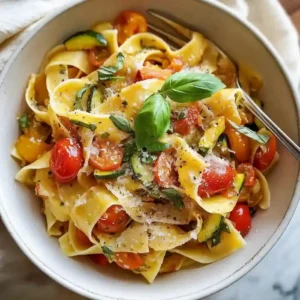
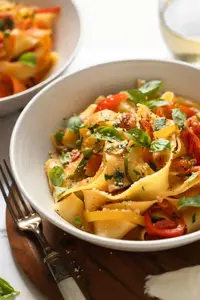
A vibrant and creamy vegetable pasta primavera dish loaded with fresh spring vegetables.
Ingredients
Scale
- 16 ounces (454 g) dried pappardelle pasta
- 3 tablespoons (42 g) unsalted butter
- 2 tablespoons (30 ml) extra virgin olive oil
- 1 cup (150 g) yellow onion, diced
- 2 bell peppers, thinly sliced
- 1 dry pint (300 g) cherry tomatoes
- 3–4 cloves garlic, minced or thinly sliced
- 2 cups (240 g) carrots, ribboned with vegetable peeler
- 1 cup (130 g) zucchini, thinly sliced and cut into half moons
- ¼ cup (60 ml) white wine or vegetable stock
- 1 ¼ cup (300 ml) vegetable stock
- 1 cup (150 g) frozen peas (optional)
- ½ cup (120 ml) half and half
- ¼ cup (25 g) grated Parmesan cheese
- ¼ cup (6 g) fresh basil leaves, for serving
- Freshly ground black pepper, to taste
- Fine sea salt, to taste
- Squeeze of fresh lemon juice (optional)
- 1 teaspoon dried basil
- ½ teaspoon dried thyme
- ½ teaspoon dried oregano
- ⅛–¼ teaspoon red pepper flakes
Instructions
- Step 1: Heat a large pot of salted water over medium-high heat until it reaches a rolling boil. Adding salt flavors the pasta as it cooks.

- Step 2: In a large skillet over medium heat, warm the olive oil. Add the diced yellow onion and cook for 3-4 minutes, stirring occasionally, until softened and aromatic.
- Step 3: Add the thinly sliced bell peppers to the skillet and cook for about 4-5 minutes, stirring, until they begin to soften and release their sweetness.
- Step 4: Add the carrot ribbons and zucchini half moons to the skillet. Gently toss to combine and cook until the vegetables remain slightly crisp but heated through.
- Step 5: Pour in the white wine (or vegetable stock if not using wine) to deglaze the pan. Scrape the bottom of the skillet to loosen any browned bits, which adds depth of flavor to the sauce.
- Step 6: Stir in the 1 ¼ cup vegetable stock and bring the mixture to a simmer, allowing the flavors to meld and the sauce base to form.
- Step 7: If using frozen peas, add them now and cook until they are heated through and tender.
- Step 8: Meanwhile, boil the pappardelle pasta until al dente as per package instructions. Stir gently every few minutes during the first 5 minutes to prevent sticking. Before draining, reserve at least ½ cup to 1 cup of pasta cooking water.
- Step 9: Drain the cooked pasta and add it to the skillet with the vegetable sauce. Toss the pasta in the sauce, adding reserved pasta water as needed to loosen and help the sauce cling to the noodles.
- Step 10: Remove the skillet from heat. Stir in half and half and grated Parmesan cheese until fully combined and the sauce is creamy. Adjust seasoning with salt, freshly ground black pepper, and a squeeze of fresh lemon juice, if desired.
Notes
- Room Temperature: Store in an airtight container away from direct sunlight and heat for up to 2 days.
- Refrigeration: Refrigerate in an airtight container for up to 5 days. Reheat gently on the stove or microwave before serving.
- Freezing: Freeze in a freezer-safe container or bag for up to 3 months. Thaw overnight in the refrigerator, then reheat on low heat.
- To prevent pasta from sticking during cooking, stir gently every few minutes for the first 5 minutes of boiling.
- If vegetables appear overcooked or too soft, reduce sautéing time to 3-4 minutes to keep them tender-crisp and colorful.
- If the sauce is too thin, simmer gently on low heat for an additional 5-10 minutes to thicken.
- For bland flavor, add an extra pinch of fine sea salt and freshly ground black pepper at the end of cooking.
- For an even creamier sauce, stir in an additional ¼ cup of half and half just before serving.
- Reheat leftovers gently on the stove over low heat or in a microwave-safe dish in the microwave until warmed through, stirring occasionally for even heating.
- Serve the Spring Vegetable Pasta Primavera with a side of roasted asparagus or garlic sautéed spinach for added texture and flavor.
- A simple mixed green salad with balsamic vinaigrette complements the dish well.
- Use leftovers in vegetable-packed wraps, as a stuffing for bell peppers, or in vegetable lasagna recipes.
- For a richer sauce, substitute half and half with an equal amount of heavy cream.
- Use whole wheat pasta in place of pappardelle for added nutrition and texture.
- Omit the Parmesan and use nutritional yeast for a cheesy flavor suitable for a vegetarian or vegan-adapted dish (ensure half and half is replaced with a non-dairy alternative to make fully vegan).
- Choose fresh, vibrant vegetables like bell peppers, zucchini, and cherry tomatoes for the best color and sweetness.
- Use freshly grated Parmesan cheese rather than pre-grated for superior melt and flavor quality.
- Extra virgin olive oil should be fresh for the best flavor and texture in the sauce.
- Minced fresh garlic provides better aroma and depth compared to pre-minced versions.
- A good quality pasta like fettuccine or penne will hold the sauce well, but pappardelle is used here. Whole wheat pasta adds additional fiber and texture.
Nutrition
- Serving Size: 1 serving
- Calories: 350
- Sugar: 1g
- Sodium: 600mg
- Fat: 20g
- Saturated Fat: 7g
- Unsaturated Fat: 10g
- Trans Fat: 0g
- Carbohydrates: 15g
- Fiber: 1g
- Protein: 30g
- Cholesterol: 90mg