
Description
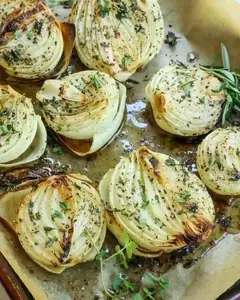
Delicious roasted onions with herb butter, perfect as a side dish or flavor enhancer for various meals.
Ingredients
Scale
- 4 medium (about 2–3 inches / 5-7.5 cm each) sweet yellow onions or Vidalia onions
- 3 tablespoons (44 ml) extra virgin olive oil
- 2 tablespoons (28 g) unsalted butter
- Kosher salt, to taste
- Fresh ground black pepper, to taste
- Fresh thyme leaves, to taste (chopped)
- Fresh rosemary, to taste (chopped)
- Optional: Balsamic vinegar, a splash (about 1 teaspoon / 5 ml), can substitute with red wine vinegar
Instructions
- Step 1: Preheat your oven to 400°F (200°C). Line a small baking sheet with parchment paper to help with cleanup and ensure even roasting.

- Step 2: Cut each onion in half from root to tip. Peel off the outer dried layers carefully. Arrange the onion halves on the prepared baking sheet, cut side up, in a single layer to ensure even cooking and flavor absorption.
- Step 3: Drizzle approximately 3 tablespoons of extra virgin olive oil evenly over the onion halves. Place a small pat (about 1/2 tablespoon or 7 g) of unsalted butter on top of each onion half to enhance browning and flavor depth.
- Step 4: Sprinkle each onion half generously with kosher salt and freshly ground black pepper to taste. Add a scattering of fresh thyme leaves and chopped fresh rosemary over the top of the onions to impart a fragrant herbal aroma and flavor.
- Step 5: Place the baking sheet in the preheated oven and roast the onions for 40-45 minutes. They should turn golden brown and become tender when pierced with a fork. About 20 minutes into roasting, if onions begin to brown too quickly, loosely cover them with aluminum foil to prevent burning while allowing continued cooking. Check at approximately 20-25 minutes and rotate the baking sheet to promote even cooking and browning. If onions are not yet tender after 45 minutes, continue roasting for up to an additional 5 minutes, checking frequently to avoid over-browning. Adjust roasting time longer if using larger onions or different varieties, up to 50 minutes as needed.
- Step 6: Once the onions are tender and golden brown, remove from oven. Sprinkle a final portion of fresh thyme and chopped rosemary over them to refresh the herbal flavor and aroma just before serving.
Notes
- Room Temperature: Store roasted onions in an airtight container at room temperature for up to 2 days, avoiding direct sunlight or heat sources.
- Refrigeration: Allow onions to cool before placing them in an airtight container. Refrigerate for up to 4 days to retain texture and freshness.
- Freezing: Wrap cooled onions tightly in plastic wrap, then seal inside a freezer bag or airtight container. Freeze for up to 3 months. Thaw refrigerated overnight before reheating.
- For stronger herb flavor, sprinkle an additional teaspoon of fresh thyme and rosemary 15 minutes before finishing roasting.
- If brown spots develop too quickly, cover onions loosely with foil around 20 minutes into baking to prevent burning while continuing slow cooking.
- Rotate the baking sheet halfway through roasting for even heat distribution and consistent caramelization.
- Larger onions require longer roasting times; monitor tenderness by gently piercing to avoid undercooked centers.
- Use sweet onion varieties like Vidalia or Walla Walla for natural caramelization and balanced sweetness.
- Choosing fresh thyme with vibrant green leaves and fresh, flexible rosemary needles will maximize freshness and herbal aroma.
- Extra virgin olive oil adds richness and aids in achieving a nice caramelized crust on the onions.
- Reheat onions in a 350°F (175°C) oven for about 10 minutes or until warmed through. Alternatively, reheat gently in a skillet over medium-low heat until heated. Avoid high heat reheating to prevent burning or drying out.
- Serve blooming baked onions as a side dish with grilled chicken breasts, pork chops, or roasted meats for a balanced meal.
- Pair with grains such as quinoa or couscous for added texture and a hearty plate.
- Add to vegetable soups, grain bowls, or salads to infuse flavor and natural sweetness.
- For extra depth, drizzle with balsamic glaze or sprinkle with crumbled feta cheese before serving.
- A light drizzle of herb-infused olive oil over onions before serving adds brightness and richness.
- Substitute balsamic vinegar (approximately 1 teaspoon) or red wine vinegar as a finishing drizzle to add acidity and balance the onion’s sweetness.
- Add a teaspoon of finely chopped garlic or minced shallots for additional savory complexity before roasting.
- Use different fresh herbs such as sage or oregano to vary the herbal notes to preference.
- Choose sweet onions like Vidalia or Walla Walla for their natural sugar content, which caramelizes well and enhances the dish’s flavor.
- Fresh thyme should be vibrant green and leafy for the best flavor; dried thyme is less potent and not recommended for this recipe.
- Fresh rosemary needs to be bright green with flexible needles; woody or brown needles indicate old or stale herbs.
- Use good quality extra virgin olive oil to impart richness and aid baking browning.
- Butter adds needed fat and caramelization; unsalted butter allows precise salt control during seasoning.
- If balsamic vinegar is included, a splash (1 teaspoon) complements the sweetness of the onions without overpowering.
Nutrition
- Serving Size: 1 onion half
- Calories: Not specified
- Sugar: Not specified
- Sodium: Not specified
- Fat: Not specified
- Saturated Fat: Not specified
- Unsaturated Fat: Not specified
- Trans Fat: Not specified
- Carbohydrates: Not specified
- Fiber: Not specified
- Protein: Not specified
- Cholesterol: Not specified