

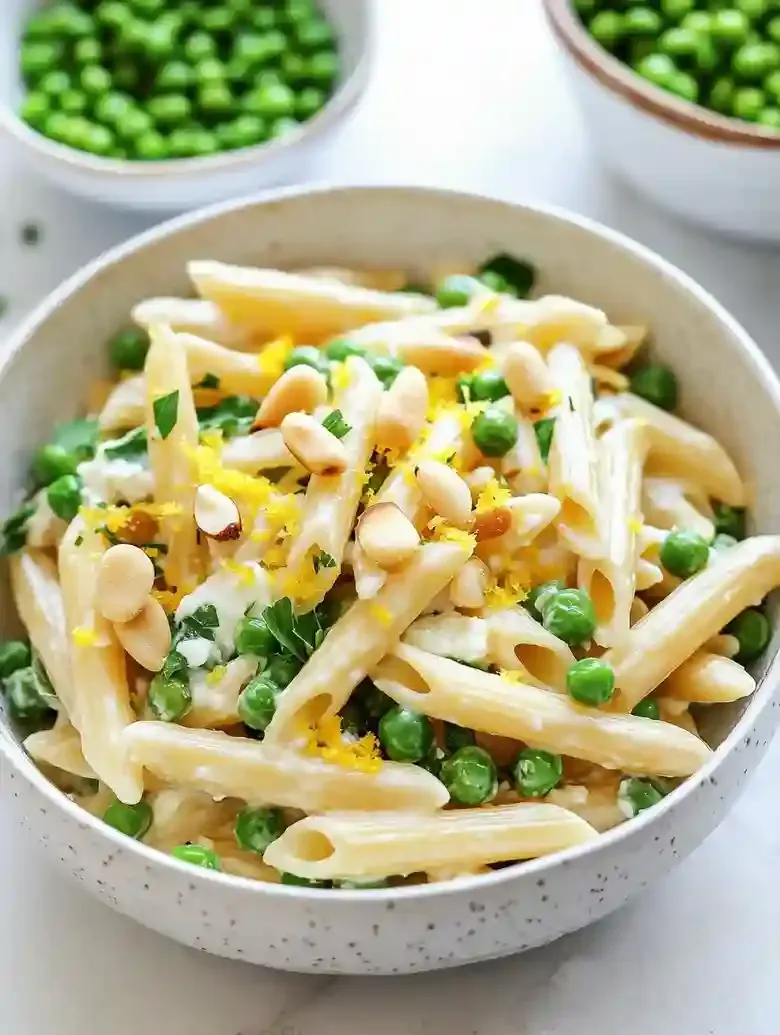
Pasta with ricotta and peas is a delightful way to celebrate fresh spring flavors in just under 30 minutes. This dish presents a creamy, comforting mix of tender pasta, fresh peas, and luscious ricotta that all come together beautifully.
This recipe addresses issues of unappealing textures and blandness in typical pasta dishes, offering a fresh and flavorful option for quick meals.
I’ve faced my share of cooking hiccups, like forgetting to reserve that pasta water, which is a crucial step for reaching the right sauce consistency. This recipe simplifies meal prep, perfect for busy weeknights or even a last-minute dinner with friends.
What makes this pasta shine is the bright lemon zest that lifts the flavors right before serving. With a total cooking time of around 21 minutes, you won’t spend all evening in the kitchen!
If you love quick, healthy dishes, you might want to try my Broccolini Frittata next. It’s another easy recipe that’s great for any day of the week!
Table of contents
Why You Will Love This Recipe
- Fresh, Creamy Texture – The ricotta brings a wonderful creaminess that melds beautifully with the pasta, creating a satisfying and vibrant base that’s not heavy.
- Bright and Zesty Flavor – Incorporating fresh lemon juice and zest introduces a lively brightness that balances the richness of the cheese and accents the sweetness of the peas.
- Seasonal Appeal – This dish captures the essence of spring, showcasing fresh peas that not only provide sweetness, but also add a pop of color to your plate.
- Quick and Convenient – With a total prep and cook time of just over 20 minutes, this pasta with ricotta and peas makes for a speedy weeknight dinner option that doesn’t compromise on flavor.
Pasta with Ricotta and Fresh Peas
- Prep Time: 10 minutes
- Cool Time:
- Cook Time: 11 minutes
- Total Time: 21 minutes
- Yield: 4 servings 1x
- Category: Main Course
- Method: Boiling and Mixing
- Cuisine: Italian
- Diet: Vegetarian
Description
Delicious spring pea and ricotta pasta recipe that is quick to prepare and perfect for a vegetarian meal.
Ingredients
- 1 pound (453 g) penne pasta, preferably high-quality dried
- 2 cups (300 g) fresh peas, or frozen peas as substitute
- 1 cup (240 g) whole milk ricotta cheese, fresh
- 1 lemon, organic, zest and juice only
- 3 tablespoons (45 ml) extra-virgin olive oil, fruity quality
- ½ cup (50 g) finely shredded Parmigiano-Reggiano cheese
- 2 tablespoons (14 g) toasted pine nuts (optional)
- 2 tablespoons (8 g) chopped Italian parsley, leaves only
- Salt, for pasta water and seasoning (sea salt, coarse or fine)
- Freshly ground black pepper, to taste
Instructions
- Step 1: Fill a large pot with water, add a generous amount of salt, and bring it to a rolling boil to ensure even cooking and flavor absorption by the pasta.

- Step 2: Add the penne pasta to the boiling salted water. Cook until al dente—firm to the bite but not hard—checking by taste a minute or two before package instructions end.
- Step 3: Two minutes before the pasta finishes cooking, add the fresh peas to the pot. This timing keeps the peas tender and brightly colored without overcooking.
- Step 4: Before draining, reserve one cup of the starchy pasta cooking water. This liquid is essential for creating a creamy sauce and should be set aside carefully.
- Step 5: Drain the pasta and peas using a colander. Return them to the empty pot away from the heat. Immediately toss them with about 2 tablespoons of olive oil, salt, and freshly ground black pepper to coat evenly without cooking further.
- Step 6: Spoon in the ricotta cheese directly into the pasta in the pot and stir well. The warmth of the pasta will gently melt the ricotta, forming a creamy sauce that blends all components.
- Step 7: If the mixture is a bit dry, gradually add some reserved pasta water, in small increments, to loosen the sauce and maintain a light creaminess without heaviness.
- Step 8: Stir in the freshly grated lemon zest and lemon juice from the organic lemon to introduce brightness that cuts through the richness and complements the peas’ sweetness.
- Step 9: Taste the pasta and add more salt or black pepper as needed to personalize the flavor balance.
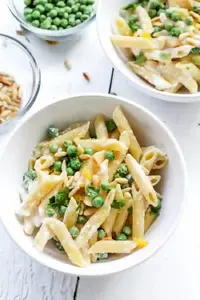
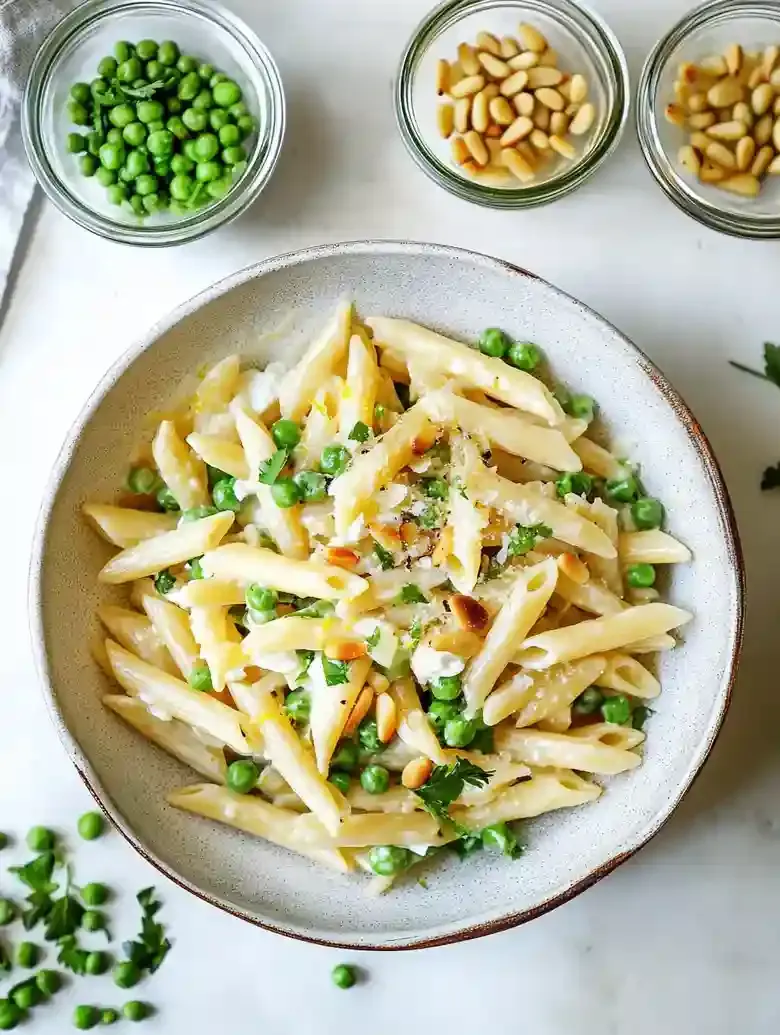
- Step 10: Transfer the pasta to serving bowls. Sprinkle toasted pine nuts, Parmigiano-Reggiano cheese, and chopped Italian parsley on top to add crunch, umami, and freshness before serving.
Notes
- Room Temperature: Store pasta with ricotta and peas in an airtight container at room temperature up to 1 day. Avoid exposure to heat sources.
- Refrigeration: Seal in airtight container and refrigerate for up to 3 days to preserve freshness and slow spoilage.
- Freezing: Place in freezer-safe container or bag and freeze up to 2 months. Thaw overnight in refrigerator and reheat gently before serving.
- To keep pasta from clumping during cooking, stir gently for the first few minutes in boiling salted water.
- If ricotta texture is uneven, mix it with 1 tablespoon olive oil before adding to pasta for smoother incorporation.
- Add peas only two minutes before pasta finishes to prevent overcooking and maintain bright color and texture.
- Use reserved pasta water to adjust sauce creaminess; 2 tablespoons is a good starting point to loosen without making it watery.
- If sauce lacks flavor, brighten it with an extra pinch of salt or fresh lemon juice before serving.
- Reheat gently in a skillet or microwave, adding extra reserved pasta water or a drizzle of olive oil to restore creaminess if needed. Heat until warm throughout, avoid overcooking to keep texture intact.
- Serve alongside a mixed greens salad or steamed asparagus for crunch. Roasted cherry tomatoes and a light lemon vinaigrette complement the pasta’s flavors well.
- Top with additional extra-virgin olive oil or fresh lemon zest to enhance brightness.
- Substitute penne with spaghetti or fettuccine for different textures; adjust cooking time accordingly.
- Use frozen peas if fresh are unavailable; add to pasta as instructed for best results.
- Add cooked chicken or shrimp for a heartier dish.
- Try ricotta-stuffed pasta shells or incorporate seasonal vegetables to expand variations.
- Choose high-quality dried pasta for best texture; fresh pasta works but requires shorter cooking time (monitor carefully).
- Select whole milk ricotta that is fresh and creamy, not watery; BelGioioso is a recommended brand.
- Fresh peas should be firm and bright green; replace with frozen peas if necessary.
- Use organic lemons for zest and juice to ensure fresh, pesticide-free citrus flavor.
- Opt for a fruity, high-quality extra-virgin olive oil as it is a key flavor component in this dish.
- Freshly ground black pepper provides better aroma and taste over pre-ground options.
Nutrition
- Serving Size: 1 serving
- Calories: Not provided
- Sugar: Not provided
- Sodium: Not provided
- Fat: Not provided
- Saturated Fat: Not provided
- Unsaturated Fat: Not provided
- Trans Fat: Not provided
- Carbohydrates: Not provided
- Fiber: Not provided
- Protein: Not provided
- Cholesterol: Not provided
Ingredient Notes
- Pasta: Use high-quality dried pasta, such as spaghetti or fettuccine, for its sturdy texture that holds up well to sauce. Fresh pasta works but requires shorter cooking time.
- Ricotta cheese: Opt for whole milk ricotta for creaminess. Make sure it’s fresh; the texture should be creamy, not too watery. Brands like BelGioioso work well!
- Fresh peas: Grab sweet, vibrant green peas. Look for firm peas with a bright color and avoid any that are dull or shriveled. Frozen peas are a solid substitute.
- Garlic: Fresh garlic provides a robust flavor. Use whole cloves; they’re milder than pre-minced options and give better taste. A good quality brand ensures freshness.
- Lemon zest: Use organic lemons for zesty flavor without pesticides. Freshly zested lemons brighten the dish. Don’t use bottled lemon juice; it lacks the freshness.
- Olive oil: A high-quality extra virgin olive oil adds richness. Look for a fruity, vibrant oil. Don’t skimp on this; it’s a key flavor enhancer in the dish!
- Pepper: Freshly ground black pepper adds warmth. Make sure to use a grinder for the best flavor. Pre-ground can taste stale and flat compared to fresh.
- Pasta: Use high-quality dried pasta, such as spaghetti or fettuccine, for its sturdy texture that holds up well to sauce. Fresh pasta works but requires shorter cooking time.
- Ricotta cheese: Opt for whole milk ricotta for creaminess. Make sure it’s fresh; the texture should be creamy, not too watery. Brands like BelGioioso work well!
- Fresh peas: Grab sweet, vibrant green peas. Look for firm peas with a bright color and avoid any that are dull or shriveled. Frozen peas are a solid substitute.
- Garlic: Fresh garlic provides a robust flavor. Use whole cloves; they’re milder than pre-minced options and give better taste. A good quality brand ensures freshness.
- Lemon zest: Use organic lemons for zesty flavor without pesticides. Freshly zested lemons brighten the dish. Don’t use bottled lemon juice; it lacks the freshness.
- Olive oil: A high-quality extra virgin olive oil adds richness. Look for a fruity, vibrant oil. Don’t skimp on this; it’s a key flavor enhancer in the dish!
- Pepper: Freshly ground black pepper adds warmth. Make sure to use a grinder for the best flavor. Pre-ground can taste stale and flat compared to fresh.
Recipe Tips
- If the pasta clumps together while cooking, stir gently for the first few minutes after adding it to boiling salted water.
- When the pasta seems too dry after draining, immediately add a bit of reserved pasta water, about 2 tablespoons, to help create a creamy texture.
- If your ricotta isn’t smooth, mix it with 1 tablespoon of olive oil before adding it to the pasta for better incorporation.
- For overcooked peas, remember to add them to the pot with the pasta only 2 minutes before the cooking time is finished, maintaining their fresh texture.
- If the pasta sauce lacks flavor, add an extra pinch of salt or a squeeze of fresh lemon juice to brighten it up before serving.
Serving Suggestions
Serve pasta with ricotta and fresh peas alongside a mixed greens salad or steamed asparagus for added crunch. I enjoy pairing it with roasted cherry tomatoes or a light lemon vinaigrette to enhance flavors.
Use to make a pasta primavera or a ricotta-stuffed shell dish. Add to your favorite baked ziti for a creamy twist or combine with seasonal vegetables for variety.
Top with extra-virgin olive oil or a sprinkle of fresh lemon zest for brightness. You could also finish with toasted pine nuts, black pepper, and freshly grated Parmigiano-Reggiano cheese for added depth.
Recipe variations
- You can use penne or any short pasta, about 1 pound, to hold the ricotta and peas well and create a satisfying texture.
- Add 3 tablespoons extra-virgin olive oil, ½ cup finely shredded Parmigiano-Reggiano, and 2 tablespoons chopped Italian parsley for fresh, savory seasoning.
- Either fresh peas or frozen peas work, 2 cups each; use frozen if fresh peas aren’t available to maintain sweetness and texture.
- If serving more than 4, double the pasta to 2 pounds and peas to 4 cups, adjusting olive oil and ricotta quantities accordingly for consistency, as detailed in my Spring Pasta.
Save This Recipe!
How to Store?
To keep your pasta with ricotta and peas fresh and delicious, follow these storage tips:
Room Temperature: Place pasta with ricotta and peas in an airtight container and store at room temperature up to 1 day, avoid heat exposure.
Refrigeration: Seal pasta with ricotta and peas in an airtight container, refrigerate up to 3 days to maintain freshness and slow spoilage.
Freezing: Transfer pasta with ricotta and peas into a freezer container or bag, freeze up to 2 months. Thaw overnight in the refrigerator before reheating gently.
Other Recipes You’ll Love
If you enjoyed this pasta with ricotta and peas or any other recipe on my blog, please leave a ⭐ star rating and let me know how it went in the comments below. I appreciate taking time to read about this recipe, thank you!
