Description
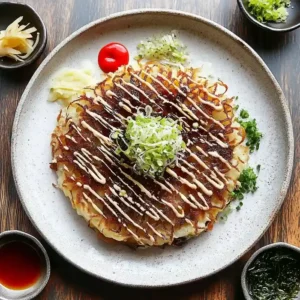
A savory Japanese pancake filled with various ingredients like cabbage and pork belly, topped with sauces and garnishes.
Ingredients
Scale
- 1 cup (120g) all-purpose flour, sifted
- 1/4 tsp Diamond Crystal kosher salt
- 1/4 tsp sugar
- 1/4 tsp baking powder
- 5.6 oz (160g) nagaimo/yamaimo (mountain yam), grated
- 3/4 cup (180ml) dashi (Japanese soup stock)
- 1/2 head green cabbage, shredded
- 1/4 cup (40g) pickled red ginger (beni shoga)
- 1/2 lb (227g) sliced pork belly
- 4 large eggs, room temperature
- 1/2 cup (30g) tenkasu (tempura scraps)
- Neutral oil, for cooking
- Okonomiyaki sauce, for serving
- Japanese Kewpie mayonnaise, for serving
- Katsuobushi (dried bonito flakes), for garnish
- Aonori (dried green laver seaweed), for garnish
Instructions
- Mix Batter Together: Start by mixing all the ingredients in a bowl until they are just combined. You want it to have a slightly lumpy texture. This gives the okonomiyaki a nice structure, so do not overdo it. If it is too smooth, your pancakes can end up flat and lifeless.
- Preheat Your Pan: Heat up your skillet over medium heat until it is nice and hot, which usually takes a few minutes. You will notice a bit of sizzle when you drop a little batter on it. This step is key for getting that crispy edge, so do not skip it!
- Pour & Spread the Batter: Spoon the batter onto the pan, creating a circular shape. Use the back of the spoon to spread it out a bit without going too thin. You will smell the batter cooking, and it will start to bubble when it is ready.
- Flip Carefully: After a few minutes, check the underside, which should be golden brown. Flip it gently to keep it intact. This is where patience comes in; if you try flipping too soon, it could break.
- Add Toppings & Cook: Once flipped, sprinkle your desired toppings evenly over the surface. You will notice the smell getting more aromatic as they cook. This helps develop flavors, but watch closely—burnt toppings can ruin the dish.
- Plate & Drizzle Sauces: When they are golden brown on both sides, slide your okonomiyaki onto a plate. Drizzle with your preferred sauces, maybe some mayo or okonomiyaki sauce, and sprinkle with bonito flakes if you like.
Notes
- Storage Tips: Wrap each okonomiyaki (without sauce or toppings) in aluminum foil and store in a freezer bag. Refrigerate for up to 3 days or freeze for a month.
- Expert Tips: A good solution for dense pancakes is mixing in an extra 1/4 cup of dashi and allowing the batter to rest for 30 minutes. When working with cabbage, a salad spinner can remove excess moisture effectively.
- For toppings that tend to burn, cooking over medium-low heat and covering the pan can help achieve even cooking without charred ingredients. If the pancake breaks while flipping, keeping the mixture thick and compact helps maintain its structure.
- When fresh nagaimo yam is not available, consider replacing it with well-drained tofu to keep the pancake’s fluffiness intact.
- Reheating Instructions: Reheat in a skillet over medium heat for about 5 minutes, or until heated through.
- Serving Suggestions: Serve with cold tofu or edamame. Pair with Japanese fried chicken (karaage) or offer a side of pickled vegetables for contrast.
- Recipe Variations: Replace pork with chicken or tofu for a different protein. Add yakisoba noodles for a modern twist.
Nutrition
- Serving Size: 1 pancake
- Calories: 725
- Sugar: 12g
- Sodium: 643mg
- Fat: 44g
- Saturated Fat: 13g
- Unsaturated Fat: 0g
- Trans Fat: 0g
- Carbohydrates: 62g
- Fiber: 9g
- Protein: 21g
- Cholesterol: 227mg