Description
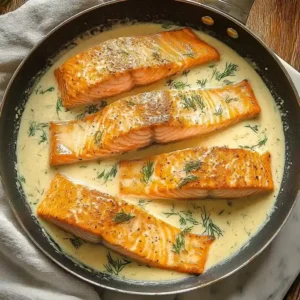
A delicious creamy dill salmon recipe with a zesty lemon dill sauce, perfect for a healthy meal.
Ingredients
Scale
- 1 tbsp (15 ml) olive oil
- 1 tbsp (14 g) butter
- 4 salmon fillets (skinless or skin-on as preferred)
- Salt, to taste
- 1 shallot, chopped
- 2 cloves garlic, minced
- Zest of 1/2 lemon
- 175 ml (2/3 cup) chicken or fish stock
- 125 ml (1/2 cup) crème fraîche or heavy cream
- 1/2 tbsp (about 1.5 g) fresh dill, finely chopped
- Black pepper, to taste (optional)
Instructions
- Step 1: Place the non-stick pan on medium-high heat. Add 1 tablespoon of olive oil and 1 tablespoon of butter. Heat until the butter melts fully and the oil shimmers. This fat mix will help create a crispy texture on the salmon.

- Step 2: Season the 4 salmon fillets lightly with salt and pepper. Place them skin-side up in the hot pan. Cook for 3 to 4 minutes until a golden brown crust forms on the surface. You will see the edges turning opaque as it cooks.
- Step 3: Carefully flip the salmon fillets to the other side. Cook an additional 2 minutes. The salmon should remain slightly undercooked inside at this point. Remove the salmon to a separate plate to rest while preparing the sauce.
- Step 4: In the same pan, add the chopped shallot. Cook over low heat for 2 to 3 minutes until the shallots become translucent and soft. Next, add the minced garlic and the lemon zest. Stir continuously and sauté for about 30 seconds until fragrant.
- Step 5: Pour 175 ml (2/3 cup) of chicken or fish stock into the pan. Use a spatula to scrape up any browned bits stuck on the pan bottom. Let it simmer for 10 minutes, allowing the liquid to reduce slightly and the flavors to concentrate.
- Step 6: Lower the heat to low. Add 125 ml (1/2 cup) of crème fraîche or heavy cream to the pan. Sprinkle in 1/2 tablespoon of finely chopped fresh dill. Stir gently to combine and let the sauce bubble gently for 5 minutes until it thickens lightly.
- Step 7: Place the salmon fillets back in the pan. Let them simmer in the sauce for 5 to 7 minutes more, cooking until the salmon is opaque and flakes easily with a fork. Confirm doneness by checking that it is no longer translucent. The sauce should also reach a slightly thickened, creamy consistency.

Notes
- Room Temperature: Store the cooked salmon in an airtight container away from direct sunlight or heat for up to 2 days.
- Refrigeration: Keep the salmon tightly sealed in an airtight container in the refrigerator for up to 4 days to maintain freshness and avoid odors.
- Freezing: Wrap salmon tightly in plastic wrap, then place in a freezer-safe bag. Freeze for up to 2 months. Thaw in the refrigerator overnight before reheating.
- Preheat your pan on medium-high heat for at least 5 minutes before adding the salmon to ensure proper searing and crust formation.
- If the sauce separates or looks curdled, remove from heat immediately and whisk in 2 tablespoons of heavy cream until smooth to restore creaminess.
- Check salmon doneness after simmering for 4 minutes; the fish should flake easily and be fully opaque to avoid overcooking.
- For a tangier sauce, add an extra teaspoon of lemon zest just before serving to brighten the flavor.
- If shallots do not soften and become translucent, cook for an additional 1 minute on low heat while stirring continuously.
- Reheat salmon gently in a pan over low heat or in a microwave at low power until warmed through. Avoid high heat to prevent drying out the fish or breaking the sauce.
- Serve the lemon dill salmon over steamed asparagus or herbed quinoa for a balanced plate. Add roasted Brussels sprouts or a mixed green salad on the side for color and nutrition.
- Garnish with fresh chopped parsley or an extra squeeze of lemon juice. A light drizzle of extra virgin olive oil before serving complements the flavors without overpowering.
- Use fish stock or chicken stock interchangeably depending on availability and your flavor preference.
- Substitute crème fraîche with heavy cream for a richer or lighter sauce option as desired.
- Add fresh parsley or chives as alternative herbs to dill for a different herbal note.
- Choose fresh, skinless salmon fillets for gentler texture and easier sauce absorption; skin-on fillets are acceptable and can add crispness if seared properly.
- Use fresh lemon zest and juice; avoid bottled lemon juice for best flavor brightness.
- Always use fresh garlic cloves pressed or finely chopped rather than powdered garlic to preserve aromatic intensity.
- Select vibrant green fresh dill with no yellowing leaves to ensure freshness and flavor in the sauce.
Nutrition
- Serving Size: 1 fillet
- Calories: 350
- Sugar: 1g
- Sodium: 600mg
- Fat: 20g
- Saturated Fat: 7g
- Unsaturated Fat: 10g
- Trans Fat: 0g
- Carbohydrates: 15g
- Fiber: 1g
- Protein: 30g
- Cholesterol: 90mg