

This lemon chicken pasta combines juicy chicken and creamy lemon sauce with perfectly cooked pasta, creating a dish that feels both fresh and comforting. It’s easy to whip up after a busy day.
This recipe addresses challenges such as dryness, blandness, and difficulties with cream sauces that home cooks often encounter when preparing pasta dishes.
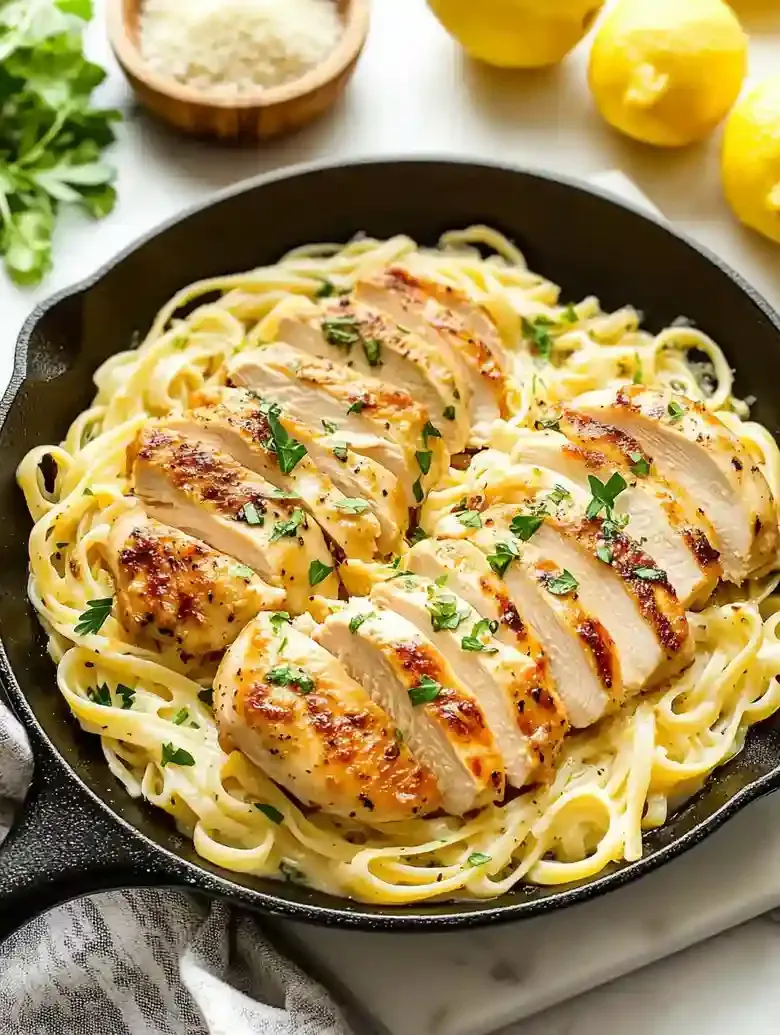
I remember one night when unexpected guests popped over, and I needed something quick. I wanted to impress them, but I also wanted to keep it simple, avoiding the usual stress of lengthy recipes. This dish met those needs with its straightforward steps and reliable flavors.
What really makes this recipe shine is how quickly it comes together, prep takes about 15 minutes, and cooking time is around 25 minutes, so you’re enjoying dinner in no time. It’s a well-tested recipe that delivers creamy goodness every time, making it a staple at my table.
If you want to try another comforting dish that brings smiles, check out my Broccolini Frittata, which is perfect for any meal of the day!
Table of contents
Why You Will Love This Recipe
- Rich, Silky Sauce , This recipe creates a smooth lemon cream sauce that coats perfectly al dente pasta, making every forkful satisfying and flavorsome.
- Comforting Texture , The tender chicken and twirly linguine create a hearty dish that feels both cozy and elevated, perfect for a weeknight family dinner or an intimate gathering.
- Bright Flavor Profile , Fresh lemon juice and zest harmonize with creamy elements, ensuring a vibrant taste that cuts through richness and keeps your taste buds engaged.
- Make-Ahead Potential , You can prepare components in advance, like the chicken and sauce, allowing for a quick assembly when it’s time to eat, ideal for busy days.
Creamy Lemon Chicken Pasta
- Prep Time: 15 minutes
- Cool Time: 0 minutes
- Cook Time: 25 minutes
- Total Time: 40 minutes
- Yield: 4 servings 1x
- Category: Main Course
- Method: Searing and Simmering
- Cuisine: Italian
- Diet: Low Lactose
Description
A creamy lemon chicken pasta dish that combines tender chicken and linguine in a rich sauce.
Ingredients
- 8 ounces (227 grams) linguine (or fettuccine)
- 2 boneless, skinless chicken breasts
- 2 tablespoons (30 ml) olive oil
- 2 tablespoons (28 grams) butter
- 2 small cloves garlic, minced
- Zest of ½ lemon
- ¼ cup (60 ml) dry white wine (or chicken broth)
- 1 cup (240 ml) chicken broth
- 1 to 2 tablespoons (8 to 16 grams) cornstarch, mixed with the heavy cream
- 1 cup (240 ml) heavy cream, cold
- 1 to 2 teaspoons (5 to 10 ml) freshly squeezed lemon juice
- ⅓ cup (about 30 grams) freshly grated Parmesan cheese
- Optional garnish: chopped fresh parsley and extra Parmesan cheese
Instructions
- Step 1: Fill a large pot with salted water and bring to a boil. Cook the linguine until just al dente according to package instructions, usually about 9 to 11 minutes. Before draining, reserve about ½ cup (120 ml) of the starchy pasta water to use later for sauce adjustment. Drain pasta and set aside.

- Step 2: Place the chicken breasts between two sheets of plastic wrap and pound to an even thickness to ensure uniform cooking. Season both sides with salt and freshly ground black pepper to taste. Heat 2 tablespoons (30 ml) of olive oil in a skillet over medium-high heat. When hot, add the chicken breasts and sear until golden brown on both sides and cooked through to an internal temperature of 165°F (74°C), about 5 to 7 minutes per side depending on thickness. Remove the chicken from the skillet and tent loosely with foil to rest and retain juices.
- Step 3: In the same skillet, reduce heat to medium and melt 2 tablespoons (28 grams) of butter. Add 2 minced garlic cloves and the zest of ½ lemon. Sauté gently for about 1 to 2 minutes until fragrant but avoid browning or burning the garlic as this imparts bitterness.
- Step 4: Pour in ¼ cup (60 ml) dry white wine or chicken broth to deglaze the pan. Scrape the bottom of the skillet with a wooden spoon or spatula to lift any browned bits. Let the liquid reduce for 1 to 2 minutes to concentrate the flavors before adding 1 cup (240 ml) chicken broth. Bring to a gentle simmer.
- Step 5: In a small bowl, whisk 1 to 2 tablespoons (8 to 16 grams) cornstarch into 1 cup (240 ml) cold heavy cream until smooth. Slowly pour the cream mixture into the simmering skillet, stirring continuously. Maintain a gentle simmer and cook for several minutes until the sauce thickens to a smooth, silky consistency coating the back of a spoon without being overly heavy.
- Step 6: Remove the skillet from heat to prevent sauce curdling. Stir in 1 to 2 teaspoons (5 to 10 ml) freshly squeezed lemon juice and ⅓ cup (about 30 grams) freshly grated Parmesan cheese until melted and fully incorporated. Add the cooked pasta to the skillet and toss gently to coat the noodles evenly with the sauce. Slice the rested chicken breasts and arrange them on top of the pasta. Garnish with chopped fresh parsley and additional Parmesan cheese if desired. Serve immediately.

Notes
- Room Temperature: Store leftovers in an airtight container at room temperature for up to 2 days. Ensure the lid seals tightly to avoid spills.
- Refrigeration: Refrigerate in an airtight container for up to 5 days. Allow the pasta to cool to room temperature before sealing to avoid condensation buildup.
- Freezing: Place in a sealed freezer container or freezer-safe bag. Freeze for up to 3 months. Thaw in the refrigerator overnight before gently reheating.
- For browning chicken breasts effectively, pat them dry with paper towels before seasoning. This promotes a golden crust while searing.
- If the sauce is too thin, whisk in an additional tablespoon of cornstarch dissolved in half the amount of cream during simmering to thicken without adding excessive creaminess.
- If garlic begins to burn, immediately remove the pan from heat to prevent bitterness in the sauce.
- If the sauce curdles, gradually add a couple of tablespoons of warm chicken broth while whisking vigorously until smooth texture is restored.
- Taste the pasta before serving; if under-seasoned, add salt a little at a time until desired seasoning is reached.
- Reheat leftovers gently in a skillet over low heat, stirring frequently. Add a splash of chicken broth or reserved pasta water to loosen the sauce if needed. Heat until warmed through, about 4 to 6 minutes, to prevent breaking or curdling of the sauce.
- Serve with sautéed asparagus or roasted bell peppers to add color and complementary flavors.
- Pair with a fresh arugula salad dressed with lemon vinaigrette for a balanced meal.
- Optional finishes include a drizzle of quality olive oil or a light balsamic reduction for nuanced flavor contrast.
- For a protein variation, add cooked shrimp or grilled zucchini to the pasta before serving.
- Use gluten-free linguine or fettuccine if gluten sensitivity is a concern.
- To reduce lactose, substitute heavy cream with a lactose-free cream alternative and use lactose-free Parmesan if available.
- Select firm, boneless, skinless chicken breasts to ensure even cooking and good absorption of the sauce flavors.
- Use freshly squeezed lemon juice rather than bottled juice to maintain fresh acidity and brightness.
- Choose high-quality heavy cream for a rich, velvety sauce texture that clings well to pasta.
- Always mince fresh garlic finely to fully release aromatic flavor compounds into the sauce.
- Grate Parmesan cheese from a block freshly for optimal flavor and melting quality. Use dried parsley only if fresh is unavailable, noting the flavor difference.
Nutrition
- Serving Size: 1 serving
- Calories: 480
- Sugar: 2g
- Sodium: 650mg
- Fat: 28g
- Saturated Fat: 15g
- Unsaturated Fat: 8g
- Trans Fat: 0g
- Carbohydrates: 35g
- Fiber: 2g
- Protein: 35g
- Cholesterol: 110mg
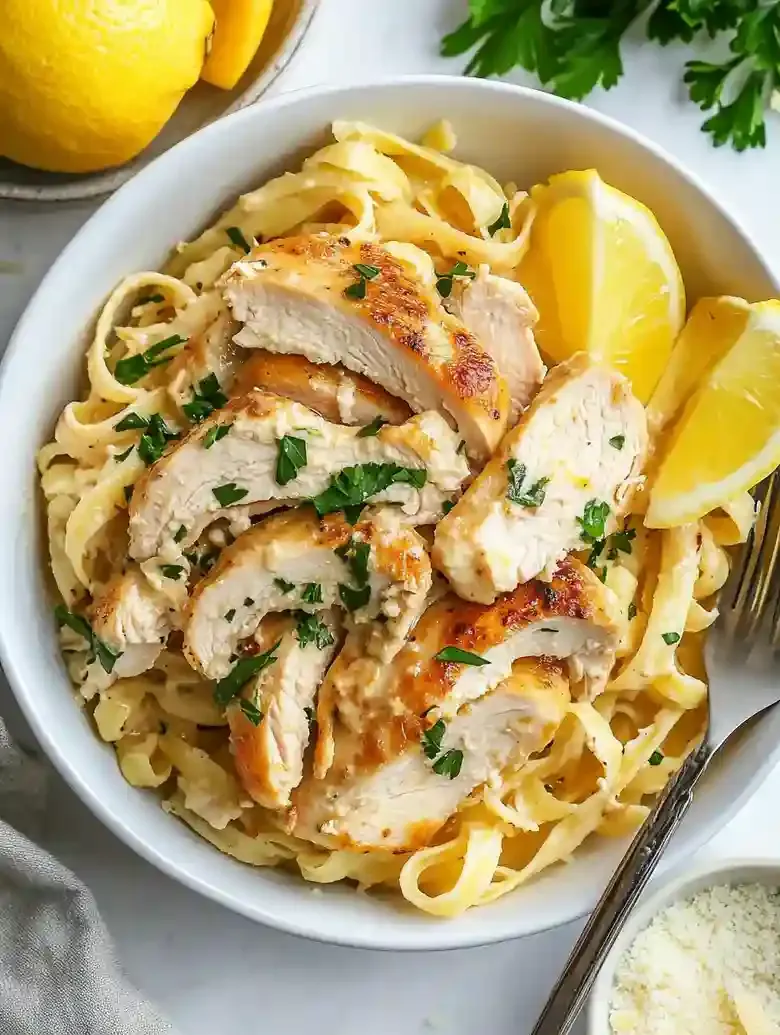
Ingredient Notes
- Chicken breasts: Go for boneless, skinless chicken breasts for easy cooking and to absorb all the creamy flavors. They cook quickly and stay juicy.
- Lemon juice: Freshly squeezed lemon juice brightens up the dish. Avoid bottled juice; it lacks that fresh zing. It’s key for balancing flavors.
- Heavy cream: Use high-quality heavy cream for a rich, velvety sauce. It helps achieve that creamy texture that clings perfectly to the pasta.
- Garlic: Fresh garlic is a must! Mince it finely to release all those aromatic flavors. It adds depth to the sauce and enhances the overall taste.
- Parmesan cheese: Freshly grated Parmesan cheese adds a sharp, salty flavor that brings the dish together. Use a block and grate it yourself for best results.
- Fresh parsley: Chopped fresh parsley adds a pop of color and freshness. It brightens the dish! If you’re out, you can use dried parsley, but the flavor won’t be as vibrant.
- Chicken breasts: Go for boneless, skinless chicken breasts for easy cooking and to absorb all the creamy flavors. They cook quickly and stay juicy.
- Lemon juice: Freshly squeezed lemon juice brightens up the dish. Avoid bottled juice; it lacks that fresh zing. It’s key for balancing flavors.
- Heavy cream: Use high-quality heavy cream for a rich, velvety sauce. It helps achieve that creamy texture that clings perfectly to the pasta.
- Garlic: Fresh garlic is a must! Mince it finely to release all those aromatic flavors. It adds depth to the sauce and enhances the overall taste.
- Parmesan cheese: Freshly grated Parmesan cheese adds a sharp, salty flavor that brings the dish together. Use a block and grate it yourself for best results.
- Fresh parsley: Chopped fresh parsley adds a pop of color and freshness. It brightens the dish! If you’re out, you can use dried parsley, but the flavor won’t be as vibrant.
Recipe Tips
- If chicken breasts aren’t browning, pat them dry with paper towels before seasoning; it helps achieve a golden crust while cooking in olive oil.
- For a too-thin sauce, whisk in 1 tablespoon of cornstarch mixed with half the cream during simmering; this will thicken it without excess creaminess.
- When garlic burns, remove it immediately from the heat; burned garlic can make the sauce bitter and ruin the flavor.
- If the sauce curdles, add a couple of tablespoons of warm chicken broth and whisk gently until smooth; this helps restore the cream’s texture.
- For under-seasoned pasta, taste it before serving, adding salt in small increments until you reach the desired flavor level.
Serving Suggestions
Serve creamy lemon chicken pasta with sautéed asparagus or roasted bell peppers for added color and flavor. A side of arugula salad with lemon vinaigrette complements this dish beautifully.
Add to the mix shrimp or grilled zucchini for variations. Consider using gluten-free pasta for a twist that accommodates dietary needs.
Top with a sprinkle of fresh parsley and extra Parmesan cheese for finishing touches. A drizzle of olive oil or balsamic reduction adds a nice finish too.
Recipe variations
- You can use linguine or fettuccine pasta to create the base of this creamy lemon chicken pasta, allowing for texture and bite variations in your dish.
- Add ½ teaspoon freshly minced garlic and the zest of ½ lemon to the sauce for aromatic flavor and bright citrus notes that sharpen the creaminess.
- Either white wine or chicken broth can be used to deglaze the pan, contributing acidity and depth to the lemon cream sauce while complementing the chicken.
- If making this for more people, double the recipe by using 16 ounces pasta and 4 chicken breasts, adjusting sauce liquids and seasoning proportionally for consistency.
Save This Recipe!
How to Store?
To keep your creamy lemon chicken pasta fresh and delicious, follow these storage tips:
Room Temperature: Use an airtight container and keep at room temperature for up to 2 days. Ensure the lid seals tightly to avoid spills.
Refrigeration: Store in an airtight container in the fridge up to 5 days. Let the pasta cool before sealing to prevent condensation.
Freezing: Place in a freezer container or bag. Freeze for up to 3 months. Thaw in the refrigerator overnight before reheating gently.
Other Recipes You’ll Love
If you enjoyed this lemon chicken pasta or any other recipe on my blog, please leave a ⭐ star rating and let me know how it went in the comments below. I appreciate taking time to read about this recipe, thank you!
