Description
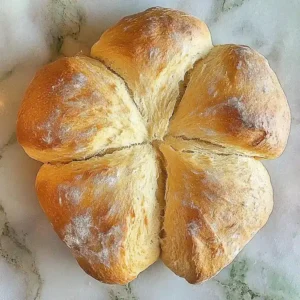
Delicious St. Patrick’s Hidden Shamrock Soda Bread, perfect for celebrating the holiday with a unique twist.
Ingredients
Scale
- 4 cups plus ¼ cup (about 516 g) unbleached all-purpose flour
- 1 teaspoon baking soda
- 1 ½ teaspoons salt
- 2 cups (480 ml) buttermilk
- Butter, unsalted, room temperature (for serving)
- Caraway seeds (optional, for traditional flavor)
Instructions
- Step 1: Preheat Your Oven: Set your oven to 375°F (190°C) ensuring it is fully heated before baking. This promotes a proper crust formation.

- Step 2: Combine Ingredients: In a large mixing bowl, sift together 4 cups of all-purpose flour, 1 teaspoon of baking soda, and 1 ½ teaspoons salt. Stir with a fork to distribute ingredients evenly.
- Step 3: Add Buttermilk Gradually: Slowly pour in 2 cups of buttermilk while stirring the mixture with a fork to blend smoothly and avoid lumps forming.
- Step 4: Dust the Work Surface: Lightly sprinkle the remaining ¼ cup of flour onto your clean work surface to prevent sticking during kneading.
- Step 5: Knead Until Smooth: Transfer the dough to the floured surface and knead for about one minute. Add more flour as necessary to prevent stickiness until the dough forms a smooth, non-sticky round ball.
- Step 6: Shape into Shamrocks: Divide dough into four equal parts. Using a greased 4-inch heart-shaped cookie cutter, shape three dough pieces into hearts and arrange them connected at the base on a baking sheet. Use the fourth piece to form the shamrock’s stem, joining it to the hearts to create the shamrock shape.
- Step 7: Start Baking: Place the shaped dough on the baking sheet into the oven. Bake for 20 minutes.
- Step 8: Rotate for Even Browning: After 20 minutes, carefully rotate the pan 180 degrees to ensure even crust browning on all sides.
- Step 9: Check for Doneness: Continue baking for an additional 18-22 minutes. The bread is done when the crust is a deep golden brown and sounds hollow when tapped.

Notes
- Room Temperature: Store bread in an airtight container at room temperature for up to 2 days to maintain texture and flavor.
- Refrigeration: Place in an airtight container in the refrigerator for up to 5 days to keep bread moist and prevent staleness.
- Freezing: Wrap bread tightly in plastic wrap, then place it in a freezer-safe container. Freeze for up to 3 months. Thaw at room temperature before serving.
- If dough is too sticky during kneading, sprinkle additional flour incrementally (up to ¼ cup) until the dough is smooth and manageable.
- Cover the loaf loosely with aluminum foil after 20 minutes of baking if the crust browns too quickly to avoid overbaking.
- Accuracy in measuring baking soda (1 teaspoon) is crucial for proper leavening; too little can cause density.
- Rotating the pan after 20 minutes promotes even heat distribution and consistent crust color.
- Visual cues such as a deep golden crust and hollow sound upon tapping are signs the bread is fully baked.
Nutrition
- Serving Size: 1 slice
- Calories: Not provided
- Sugar: Not provided
- Sodium: Not provided
- Fat: Not provided
- Saturated Fat: Not provided
- Unsaturated Fat: Not provided
- Trans Fat: Not provided
- Carbohydrates: Not provided
- Fiber: Not provided
- Protein: Not provided
- Cholesterol: Not provided