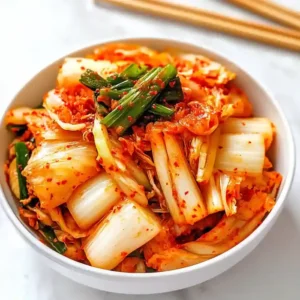
Description
This easy beginner kimchi recipe requires no fish sauce and is made through fermentation.
Ingredients
Scale
- 1 large head napa cabbage (3 to 5 lbs)
- 1/4 cup non-iodized salt (60 g)
- 1/4 to 1/2 cup gochugaru (Korean pepper flakes, 30 to 60 g)
- 7 to 10 cloves garlic, fresh
- 3 to 4 inches ginger (7.5 to 10 cm), fresh
- 1 tsp sugar
- 3 to 4 Tbsp water (45 to 60 mL)
- Optional: 3 Tbsp miso paste
- 2 carrots (cut into strips) or 8 oz daikon radish
- 4 green onions (cut into 1-inch pieces)
Instructions
- Mix Ingredients Together: Start by mixing your napa cabbage with non-iodized salt in a large bowl. Massage the salt into the cabbage until it feels slightly crunchy but pliable, releasing some moisture. This step is essential for achieving that juicy crunch in your kimchi.
- Add Seasonings & Veggies: Stir in the minced garlic, grated ginger, and gochugaru, along with the carrots or daikon. Mix well until all ingredients are incorporated. The aroma should be fragrant and a bit spicy. Be cautious not to add too much gochugaru at once to avoid overpowering heat.
- Pack Kimchi Into Jars: Tightly pack the kimchi mixture into clean glass jars. As you compress it, you should see some brine forming. Leave some space at the top of the jars because the kimchi will expand during fermentation; avoid overfilling.
- Ferment in a Warm Spot: Leave the packed jars out at room temperature for a couple of days, away from direct sunlight. You should notice bubbles forming, which indicates fermentation is occurring.
- Taste Test & Store: After a couple of days, check the taste of your kimchi. It should be slightly tangy while still crunchy. If it is too sour for your preference, place it in the refrigerator to slow fermentation.
Notes
- Storage Tips: Store kimchi in the fridge in clean glass jars to slow the fermentation process. It can last several weeks or months if kept in a sterilized jar.
- Expert Tips: Use gloves when mixing ingredients to avoid lingering garlic smells on your hands. If kimchi is not bubbling during fermentation, ensure it is stored at room temperature away from sunlight. For overly salty kimchi, lightly rinse under cold water before consumption.
- Reheating Instructions: Reheating is not typically necessary for kimchi; serve chilled or at room temperature as a side dish.
- Serving Suggestions: Serve as a side dish with rice and proteins. Use it as a topping for sushi or rice bowls for added flavor. It can also add a spicy kick as a topping for tacos.
- Recipe Variations: For added crunch, include chopped cucumber. Incorporate fruits like apple or pear for a touch of sweetness. You can also add sesame seeds for a nuttier flavor.
- Ingredient Notes: When selecting napa cabbage, choose heads that feel heavy and have crisp, unblemished leaves for the best results. For gochugaru, if unavailable, hot paprika powder can be a substitute; however, adjust to taste. Miso paste provides an umami flavor, but it can be skipped for a simpler recipe.
Nutrition
- Serving Size: 1 cup
- Calories: 23
- Sugar: 2g
- Sodium: 624mg
- Fat: 0g
- Saturated Fat: 0g
- Unsaturated Fat: 0g
- Trans Fat: 0g
- Carbohydrates: 4g
- Fiber: 2g
- Protein: 1g
- Cholesterol: 0mg