

This asparagus frittata is a delightful dish packed with bright flavors from spring onions, asparagus, and creamy feta. It’s not just a simple recipe; it comes together easily for a tasty brunch or light dinner.
This frittata recipe solves issues of texture and flavor in egg dishes, providing a delightful balance of seasonal ingredients and ease of preparation.
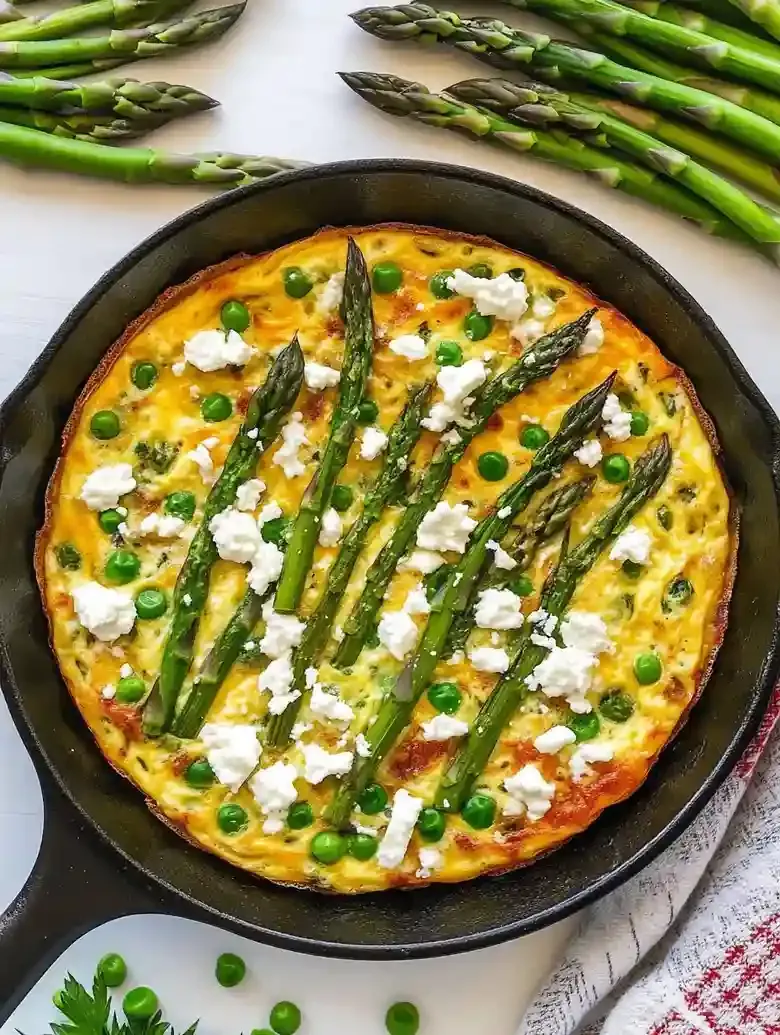
I’ve wrestled with frittatas before, struggling to get the eggs fluffy while not overcooking the veggies. With this version, I found a way to keep everything tender and flavorful without fussing over timing. That’s what makes it a keeper in my kitchen during busy evenings.
You can whip this up in just about 45 minutes total, pulling everything together in a warm and satisfying meal that feels lighter with every bite. Serve it warm, cut into wedges, and you’re looking at a recipe that’ll stick around for years to come.
If you’re up for some other delicious frittata options, check out my Broccolini Frittata, which is also a hit in our home!
Table of contents
Why You Will Love This Recipe
- Fresh and Light Flavor – The combination of asparagus and peas creates a vibrant dish that captures the essence of spring. Feta adds a creamy richness, making every bite satisfying.
- Textural Harmony – The tender, fluffy eggs provide a delightful contrast to the crisp-tender asparagus and sweet peas, ensuring a balanced mouthfeel throughout the frittata.
- Quick Prep Time – With just 15 minutes of preparation, you can whip up this dish in no time. It’s a fantastic option for a busy weekday breakfast or a leisurely weekend brunch.
- Versatile Any Time of Day – This frittata isn’t just for breakfast! It makes a wonderful light lunch or a simple dinner when paired with a fresh side salad, easing your meal planning.
Asparagus Frittata with Peas and Feta
- Prep Time: 15 minutes
- Cool Time:
- Cook Time: 30 minutes
- Total Time: 45 minutes
- Yield: 4 servings 1x
- Category: Main Dish
- Method: Baking
- Diet: Low Lactose
Description
A delicious asparagus frittata with peas and feta, perfect for a low lactose diet.
Ingredients
- 6 medium eggs
- 60 ml milk of choice
- 1/2 teaspoon smoked paprika
- 1 garlic clove, minced
- Sea salt, to taste
- Freshly ground pepper, to taste
- 1 tablespoon butter
- 3 green onions, thinly sliced
- 250 g asparagus, woody ends removed and halved
- 75 g fresh or frozen peas
- 75 g sheep’s cheese feta, crumbled
Instructions
- Step 1: In a large bowl, whisk the eggs, milk, smoked paprika, and minced garlic until the mixture is fluffy and well combined. Season with sea salt and freshly ground pepper to taste. Whisking about 30 seconds incorporates air for a lighter texture.

- Step 2: Heat the butter in an oven-safe skillet over medium heat. Add the thinly sliced green onions and cook for about 5 minutes until they are soft and slightly translucent, developing subtle sweetness.
- Step 3: Add the prepared asparagus to the skillet. Cook, stirring occasionally, for 5 to 6 minutes until the asparagus is crisp-tender and bright green. The stalks should retain some bite without being tough.
- Step 4: Fold in the peas with the asparagus gently to combine, adding a burst of sweetness and vibrant color.
- Step 5: Pour the whisked egg mixture evenly over the vegetables in the skillet. Shake the pan slightly to distribute the eggs evenly, ensuring every bite contains a balance of egg and vegetables.
- Step 6: Sprinkle the crumbled feta evenly on top of the egg and vegetable mixture. Transfer the skillet to a preheated oven and bake for 15 to 20 minutes. The frittata is done when the eggs are set and lightly golden around the edges. Test doneness by gently shaking the pan: if there is no significant wobble, the frittata is cooked through.

Notes
- Room Temperature: Place the frittata in an airtight container; it can be kept at room temperature for up to 2 days, avoiding heat exposure.
- Refrigeration: Store in an airtight container inside the refrigerator at 4°C for up to 4 days to preserve freshness and prevent moisture loss.
- Freezing: Wrap in plastic wrap, then place in a freezer-safe container. Freeze for up to 1 month. Thaw overnight in the refrigerator before reheating.
- Snap off and discard asparagus woody ends before slicing to ensure tender texture.
- If the frittata is undercooked after 20 minutes baking, continue cooking and check by gently shaking the skillet; a wobble indicates more time is needed.
- If the frittata puffs excessively in the oven, lower the temperature by 15°C to allow for gradual cooking and even texture.
- Whisk eggs for about 30 seconds until fluffy before mixing with other ingredients to incorporate air and achieve a drier, firmer frittata.
- Reheat leftovers in a skillet over medium heat until warmed through for best texture preservation. Avoid microwaving to maintain flavor and consistency.
- Serve warm slices with a side of mixed greens or a light cucumber salad. Roasted potatoes or quinoa are suitable hearty accompaniments.
- Use leftover frittata to make breakfast burritos or wraps with gluten-free tortillas. It also works well crumbled over green salads or added to grain bowls.
- Top with a drizzle of balsamic glaze or a dollop of tzatziki. Fresh herbs like dill or parsley make an excellent garnish to finish the dish.
- Substitute butter with extra virgin olive oil for sautéing to add depth of flavor and make the recipe suitable for those avoiding dairy fats.
- Use fresh peas when in season for optimal sweetness; frozen peas thawed are a convenient alternative.
- Replace sheep’s milk feta with goat cheese or cow’s milk feta if preferred, maintaining the same quantity (75 g crumbled).
- Select bright green, firm asparagus stalks with tightly closed tips to ensure freshness and a pleasant crunch.
- Use large, fresh eggs for best binding and fluffy texture.
- High-quality crumbled feta enhances the creaminess and tang of the frittata.
- Freshly ground black pepper provides a balanced kick, complementing the cheese richness.
Nutrition
- Serving Size: 1 slice
- Calories: Not specified
- Sugar: Not specified
- Sodium: Not specified
- Fat: Not specified
- Saturated Fat: Not specified
- Unsaturated Fat: Not specified
- Trans Fat: Not specified
- Carbohydrates: Not specified
- Fiber: Not specified
- Protein: Not specified
- Cholesterol: Not specified
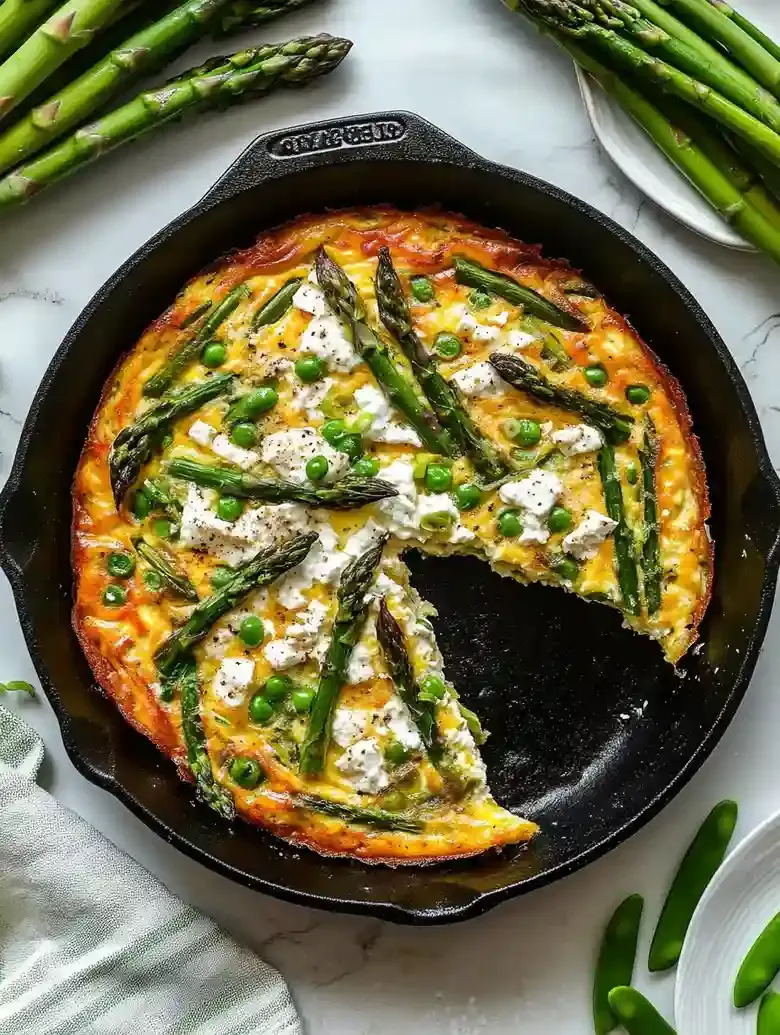
Ingredient Notes
- Asparagus: Look for bright green, firm stalks with tightly closed tips. Fresh asparagus adds a nice crunch and freshness to the frittata.
- Peeled fresh peas: Opt for sweet, vibrant green peas for the best taste. They bring a burst of sweetness that complements the frittata nicely.
- Feta cheese: Choose a good quality feta, preferably from sheep’s milk for creaminess. Crumbled feta adds a tangy flavor that enhances the dish’s overall taste.
- Eggs: Select large, fresh eggs for a rich flavor and cohesive texture. They’ll bind everything together perfectly, making your frittata fluffy.
- Olive oil: Use extra virgin olive oil for sautéing. It adds depth of flavor and helps cook the vegetables evenly without burning.
- Black pepper: Freshly ground black pepper gives a nice kick and enhances the overall flavor of the frittata. It’s essential for balancing the richness of the cheese.
- Asparagus: Look for bright green, firm stalks with tightly closed tips. Fresh asparagus adds a nice crunch and freshness to the frittata.
- Peeled fresh peas: Opt for sweet, vibrant green peas for the best taste. They bring a burst of sweetness that complements the frittata nicely.
- Feta cheese: Choose a good quality feta, preferably from sheep’s milk for creaminess. Crumbled feta adds a tangy flavor that enhances the dish’s overall taste.
- Eggs: Select large, fresh eggs for a rich flavor and cohesive texture. They’ll bind everything together perfectly, making your frittata fluffy.
- Olive oil: Use extra virgin olive oil for sautéing. It adds depth of flavor and helps cook the vegetables evenly without burning.
- Black pepper: Freshly ground black pepper gives a nice kick and enhances the overall flavor of the frittata. It’s essential for balancing the richness of the cheese.
Recipe Tips
- If asparagus seems tough, snap ends off and discard before slicing the stalks; this helps remove the woody parts for better texture in your frittata.
- When the frittata is undercooked after 20 minutes, check by gently shaking the pan; if it wobbles significantly, it needs more time in the oven.
- If your frittata puffs too much during baking, reduce oven temperature by 15 degrees Celsius to allow for more gradual cooking and even texture.
- For drier frittata, whisk eggs until fluffy; aim for about 30 seconds before combining with other ingredients to incorporate air for better consistency.
- If you notice leftover frittata, store it in an airtight container in the refrigerator for up to 3 days, reheating in a skillet for best results.
Serving Suggestions
Serve slices of asparagus frittata with a side of mixed greens or a light cucumber salad. You can also pair it with roasted potatoes or quinoa for a hearty meal.
Use the asparagus frittata to make breakfast burritos or wraps with gluten-free tortillas. You can also add it to a grain bowl or crumble it over a green salad for variety.
Top with a drizzle of balsamic glaze or serve with a dollop of tzatziki. Fresh herbs like dill or parsley also make a great garnish to finish the dish.
Recipe variations
- You can use 6 medium eggs as the base for the asparagus frittata, ensuring the right protein content and structure for the dish.
- Add 1/2 teaspoon smoked paprika and 1 minced garlic clove to the egg mixture for subtle smoky flavor and savory depth, seasoning with salt and pepper to taste.
- Either fresh or frozen peas can be used; fresh peas offer sweetness, while frozen peas provide convenience without compromising the dish’s taste and texture.
- If using this recipe for more servings, double the ingredients to serve 8 and bake in batches or use a larger oven-safe skillet accordingly, maintaining cooking times.
Save This Recipe!
How to Store?
To keep your asparagus frittata fresh and delicious, follow these storage tips:
Room Temperature: Place the asparagus frittata in an airtight container and keep it at room temperature up to 2 days, avoiding heat exposure.
Refrigeration: Store in an airtight container inside the refrigerator at 4°C, preserving freshness for up to 4 days while preventing moisture loss.
Freezing: Wrap in plastic wrap, then place in a freezer-safe container. Freeze up to 1 month. Thaw overnight in the refrigerator before reheating.
Other Recipes You’ll Love
If you enjoyed this asparagus frittata or any other recipe on my blog, please leave a ⭐ star rating and let me know how it went in the comments below. I appreciate taking time to read about this recipe, thank you!
